Security fence installation in Frederick

Specialty Fencing

Security Fence Installation in Frederick, MD

Perimeter security fencing for commercial yards, equipment storage, residential properties, and facilities where deterrence and access control are the primary requirements.

01Security Means No Footholds

A climbable fence is not a security fence. Security fencing uses anti-climb features — steep pickets, no horizontal members below the top, or added deterrents like razor ribbon — to prevent scaling. The material and profile must be selected with climbing prevention in mind, not just height.

02Height and Visibility Together

An 8-foot fence around a property perimeter that blocks sight lines creates concealment for criminal activity. Many security applications balance height with visibility (chain link, ornamental iron) so the interior of the property remains observable from outside.

03Access Control at Every Opening

A security fence with an unsecured pedestrian gate or a gap at the equipment pad is not a security perimeter. We design security fencing with full perimeter closure — every gate location identified and addressed with appropriate hardware before finalizing the layout.

Frederick Security Fencing

Security Fence Installation: What "Security" Actually Means

Security fencing is a deterrence and delay tool — it slows an intruder and signals that access is controlled. It is not an impenetrable barrier. The effectiveness of a security fence depends on the combination of height, anti-climb features, visibility, access control at all openings, and lighting. We discuss all these factors when planning a security fence installation — a tall fence with poor gate hardware provides less security than a medium fence with full perimeter control.

Security Fence Options for Frederick Properties

Chain link (6-8 foot, commercial gauge): The most economical security fence for commercial yards, storage areas, and large perimeters. Commercial-gauge (11 or 9 gauge) chain link is significantly more resistant to cutting and bending than residential gauge. Top rail with barbed wire attachment (3-strand minimum) adds deterrence. Full-height visibility makes the interior observable from outside.

Welded wire (anti-climb panels): Rigid welded wire panels with small mesh openings (typically 2x1 or 3x1 inch) that provide no foothold for climbing. More resistant to cutting than chain link. Used for commercial property perimeters, equipment yards, and industrial applications. Available in heights up to 8 feet.

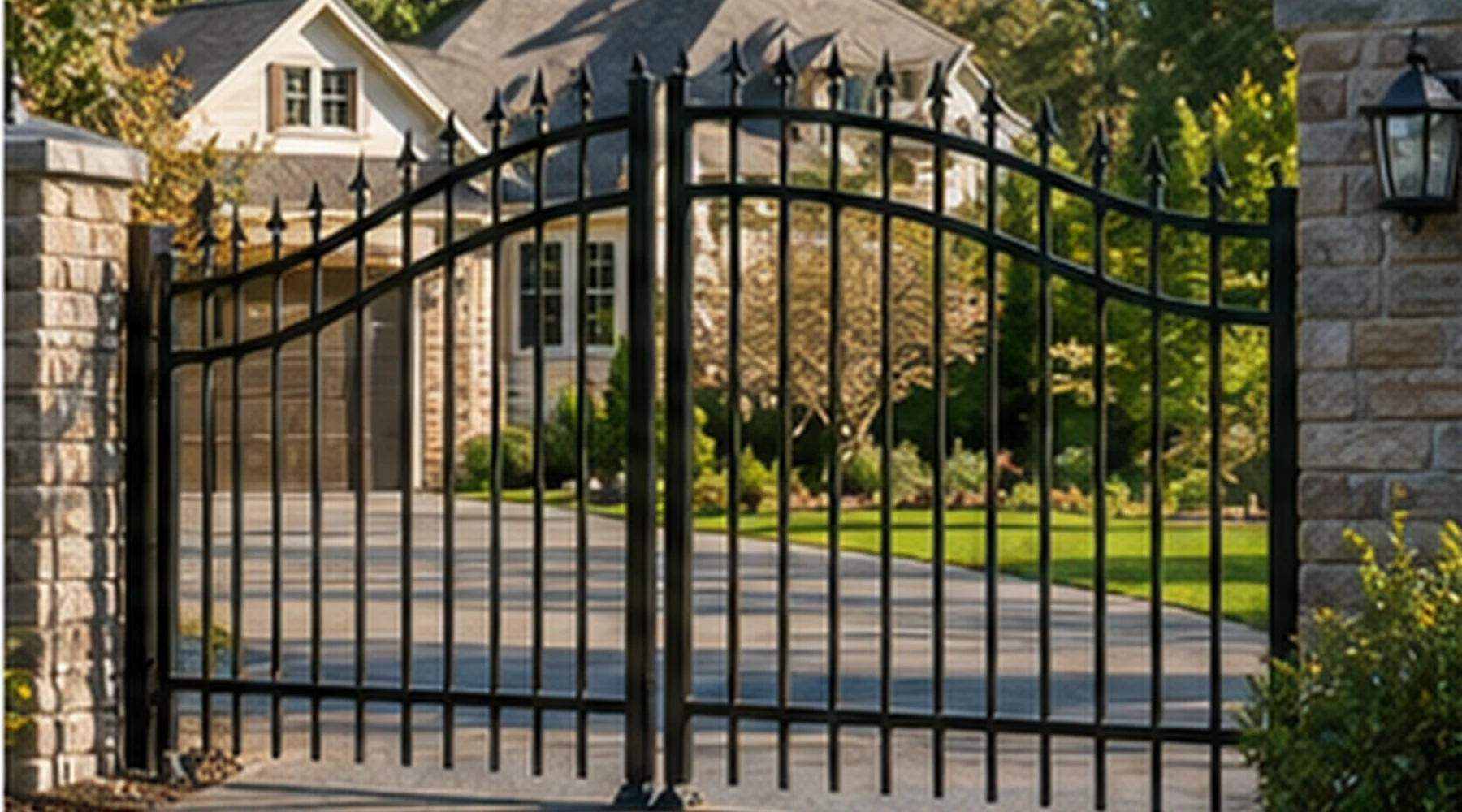
Ornamental iron or steel (spear top): High-end security option for commercial and residential properties where appearance matters alongside security. Spear-top finials actively deter climbing. Provides no horizontal footholds. Requires periodic maintenance to prevent rust. More expensive than chain link or welded wire.

Anti-Climb Features

  • Barbed wire or razor ribbon at top rail (commercial applications)
  • Spear-top or finial profiles on ornamental fencing
  • Welded wire mesh with no horizontal foothold pattern
  • Angled top extension (inward or outward angle)

Security Fence Installation Standards

  • Posts at 36-inch minimum depth (for 6-8 foot fence heights)
  • Concrete fill on all posts to grade
  • Gate posts at 36-inch minimum with concrete fill
  • No gaps at grade larger than 2 inches
What Happens Next

Our Security Fence Installation Process

1

Security Assessment

Perimeter mapped. All gate and access locations identified. Threat level and required deterrence confirmed. Material and height specified.

2

Permits and Approvals

Security fence heights above 6 feet typically require a building permit in Frederick County. We confirm permit requirement and submit documentation as part of the project scope.

3

Post Setting

Posts set at minimum 36-inch depth with full concrete fill. Posts at maximum spacing for the selected fence type. No shallow post compromises for security applications.

4

Fence, Anti-Climb, and Gate Installation

Fence panels installed. Anti-climb features added at top rail. Gates hung with heavy-duty hardware and keyed locks. Full perimeter walk at completion.

Barbed Wire and Razor Ribbon

Barbed wire and razor ribbon (concertina wire) are effective anti-climb deterrents for commercial and industrial properties. They are not appropriate for residential applications in most Frederick County HOA communities and may require special permits in certain zones. We confirm the permitted use before including these features in the scope. For residential security applications, spear-top ornamental fencing is a code-compliant alternative that provides deterrence without the maintenance concerns of barbed wire.

Security Lighting Integration

Fence height alone does not create a secure perimeter — lighting that eliminates shadow areas where someone could work on the fence unobserved is equally important. We don't install lighting, but we coordinate with electrical contractors and recommend lighting placement during fence planning so the fence and lighting work together as a security system.

Commercial Security Fence Permits

Security fences over 6 feet in Frederick County typically require a building permit. Commercial applications may also require a site plan review depending on the property's zoning classification. We handle the permit documentation for fence projects and work with the property owner to confirm any required reviews before installation begins.

Security Fence Maintenance

Chain link and welded wire security fences require periodic inspection — checking tension of the chain link fabric, gate hardware, and post plumb. Rust at post bases, loose tension wire, and damaged fabric from vehicle contact are the most common maintenance issues. An annual inspection keeps the perimeter functional and catches damage before it creates a gap in coverage.
Frederick Security Fencing

Need a Secure Perimeter?

Tell us the application, perimeter footage, and security level required and we will put together the right specification.

Request Service

Questions About Security Fence Installation

What is the most secure fence type for a commercial property?

For most commercial applications, 8-foot commercial-gauge chain link with 3-strand barbed wire arm and full-closure keyed gates provides strong deterrence at the best cost-per-linear-foot. For higher-security applications where aesthetics also matter, welded wire anti-climb panels or ornamental steel with spear tops are appropriate. True high-security applications (critical infrastructure, high-value storage) may warrant additional measures beyond standard commercial fence.

Do I need a permit for a 6-foot residential security fence?

Frederick County generally does not require a permit for 6-foot or lower residential fencing installed in the rear or side yard. Front yard fencing and heights above 6 feet typically require a permit. Commercial fencing above 6 feet generally requires a permit and may require site plan review depending on the zoning. We confirm permit requirements for the specific address and application before starting.

Can I add security features to my existing fence?

Yes — barbed wire arms, razor ribbon, fence toppers, and additional height can often be added to existing fence posts if the posts are in adequate condition and properly set. We assess the existing post condition and capacity before recommending additions. Adding height or weight to posts that are marginal will accelerate their failure.

Related Specialty Fence Services