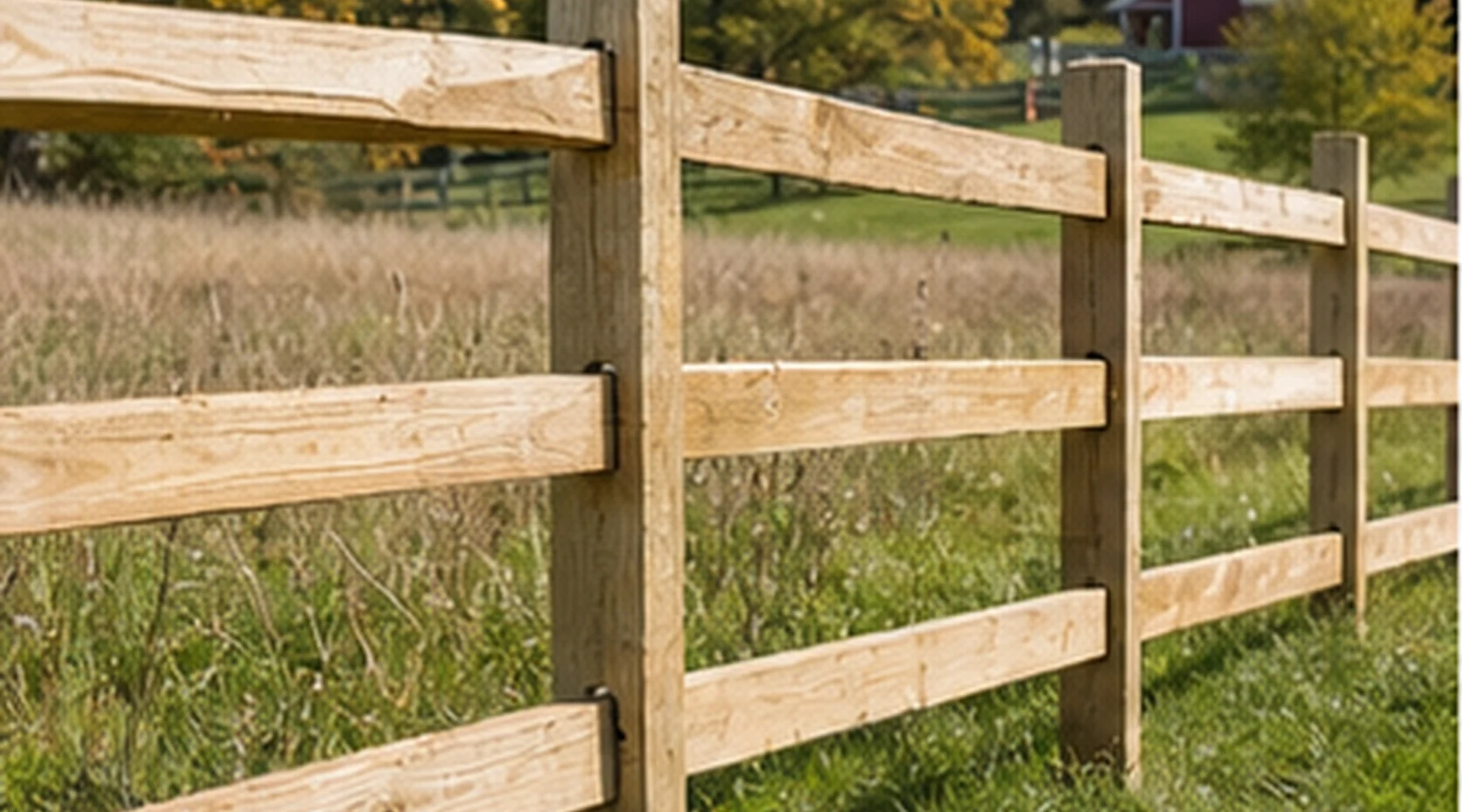
Sloped yard fence installation in Frederick

Property-Specific Fencing

Sloped Yard Fence Installation in Frederick, MD

Fencing on sloped yards in Frederick County — using stepped or racked installation to produce a fence that follows the grade correctly without gaps at the base or panels that wrack out of square.

01Racked vs. Stepped: Understand the Options

Racked fence follows the slope continuously — the fence angles with the ground and the top line is not level. Stepped fence stays level in sections with a vertical drop between sections — the top line is level in each panel but steps down at post locations. Each approach has different visual results and different material constraints.

02The Gap at the Base

A stepped fence on a slope has triangular gaps under each panel where the ground drops away between steps. These gaps are a containment problem for pets and small children. We discuss gap management — infill boards, gravel boards, or grade correction — before finalizing the installation approach on sloped lots.

03Post Height Calculation on Slopes

On a sloped fence run, posts at different ground elevations need to be cut to different lengths to produce a consistent above-grade fence height. We calculate post heights before installation so the finished fence is consistent — not a mix of tall and short posts reflecting the careless use of uniform-length posts on uneven ground.

Frederick Sloped Yard Fencing

Sloped Yards: Planning the Grade Before Planning the Fence

Frederick County properties have significant grade variation — many homes back to wooded slopes, sit on rising terrain from the street, or have rear yards that drain toward a low corner. Installing fence on these lots requires planning the grade management approach before specifying material, because not all fence materials handle slopes the same way. Vinyl panels cannot be racked — they must be stepped. Wood and aluminum can be racked or stepped. The slope determines which approach is appropriate.

Stepped vs. Racked Installation: Which is Right

Stepped installation: Fence panels are installed level. Each panel drops in elevation to match the grade below it, creating a stair-step appearance at the base. The fence top is a series of level segments. Required for vinyl fence, which cannot be angled without special rackable sections. Works on any material. Gap at the base under each step is a design consideration that needs to be addressed.

Racked installation: The fence follows the slope — the top of the fence runs parallel to the ground rather than staying level. Works well on gentle, consistent slopes. Maximum rackability is limited by the fence product — most wood fences can be racked to any angle; aluminum systems have a specified maximum rack angle (typically 20-25 degrees for residential products). Produces a clean appearance on slopes where the top line follows the terrain rather than stepping down it.

Combination: For steep slopes with sections of varying grade, a combination of stepped and racked sections is sometimes the best approach. We plan the combination before installation, not in the field.
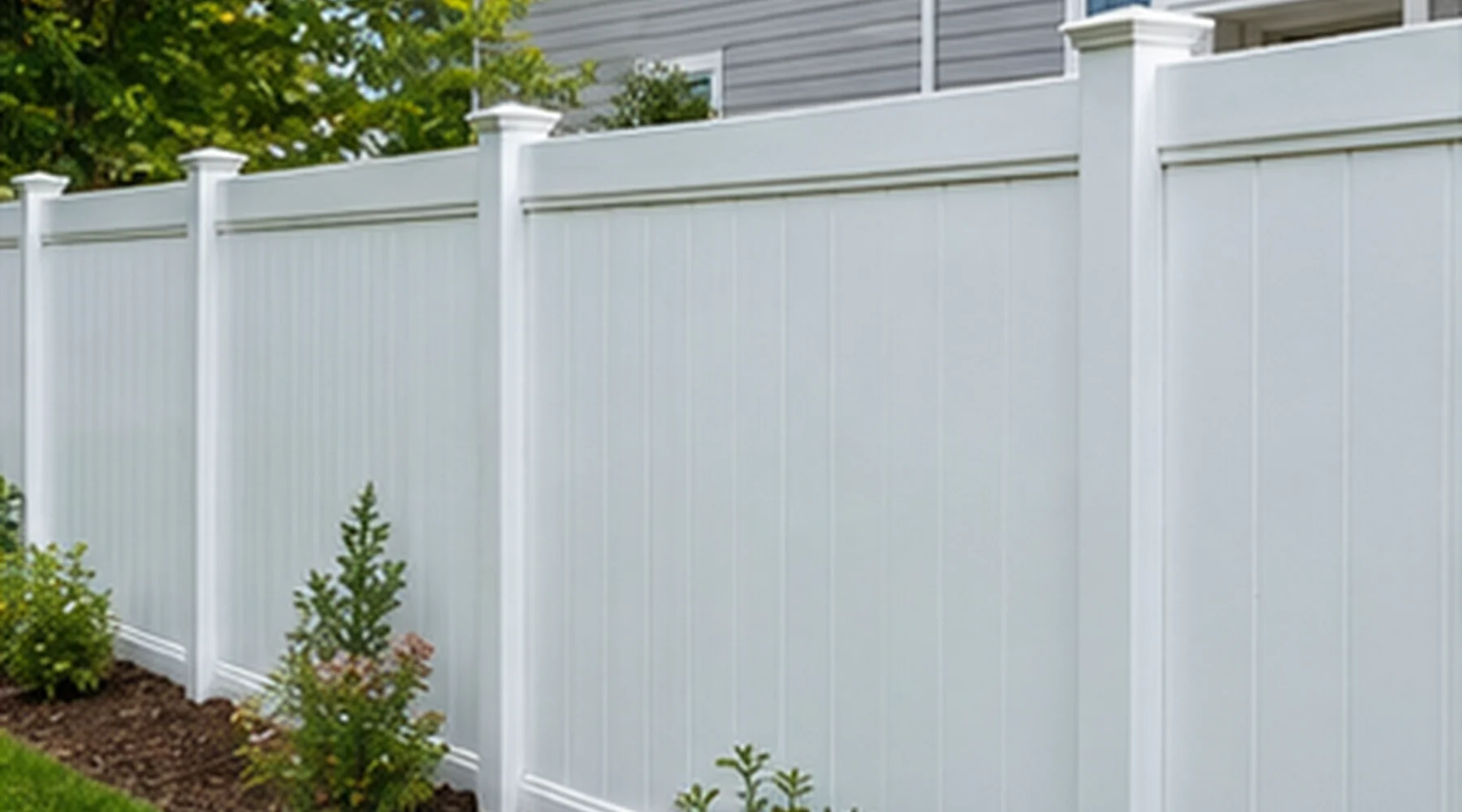
Materials and Slope Compatibility

  • Wood: racks to any angle, steps easily
  • Aluminum: racks to product limit (typically 20-25°)
  • Vinyl: steps only — cannot be racked without special panels
  • Chain link: continuous drape to follow grade, no steps required

Sloped Fence Installation Standards

  • Post heights calculated per elevation at each post location
  • Gap at base addressed before panels installed
  • Stepped sections designed for even panel widths
  • Grade below fence assessed for drainage that could undermine posts
What Happens Next

Our Sloped Yard Fence Installation Process

1

Grade Assessment

Elevation change measured across the full fence run. Installation approach (stepped, racked, or combination) determined. Gap management method agreed.

2

Post Layout and Height Calculation

Post locations and heights calculated on paper. Panel widths planned to avoid narrow panels at grade transitions. Post heights cut per elevation chart.

3

Post Installation

Posts set at 30-inch minimum depth. Post heights confirm correct above-grade height at each elevation. Posts plumbed and cured.

4

Panel Installation and Gap Close

Fence panels installed per step/rack plan. Grade gaps addressed with infill boards or gravel boards. Final alignment and gap check before completion.

The Base Gap on Stepped Fencing

A 6-foot fence stepped in 4-panel sections on a yard that drops 8 inches per 8 feet leaves a triangular gap at the base of each step that widens from the bottom rail down to the ground. On a moderate slope, this gap reaches 6-8 inches at the hinge post — more than enough for a small dog or child to pass through. We close this gap with a vertical infill board set at the slope angle, or with a gravel board along the base, depending on the material and substrate.

Retaining Wall and Fence Combinations

Some sloped yards are better served by a low retaining wall at the base of the fence run — creating a level platform for the fence and eliminating the gap problem entirely. If the slope is severe enough that a retaining wall would make the fence look better and resolve the gap issue, we discuss that option. We install the fence; retaining wall work is coordinated with a hardscape contractor.

Drainage at the Fence Base on Slopes

Slopes channel water downhill along the fence line. Posts at the low end of a fence run on a slope see more water than posts on level ground. UC4B treatment for posts and concrete set slightly proud of grade (sloped away from the post) reduces water retention at the post base on slopes. We pay particular attention to post base treatment on downhill ends of fence runs.

Measuring Slope Before Getting Quotes

A rough measurement of slope — how many inches of elevation change over a given horizontal run — helps us plan the installation approach before the site visit. You can measure this by placing a level on a long board, noting where it reads level, and measuring the gap between the board end and the ground. That gap over 8 feet gives the slope rate. Providing this before the estimate helps us quote accurately without a site visit for simpler projects.

Frederick Sloped Yard Fencing

Sloped Yard Making Fencing Complicated?

We plan the grade approach before specifying material so the finished fence follows the slope correctly and closes at the base.

Request Service

Questions About Sloped Yard Fence Installation

Can vinyl fence be installed on a slope?

Vinyl fence must be stepped — it cannot be racked (angled to follow the slope) without special-order rackable sections that are not available in all product lines. Stepped vinyl fence has a stair-step appearance at the base with triangular gaps that need to be addressed. For gentle slopes (less than 1 inch per foot), the step gaps are small and manageable. For steeper slopes, the gaps become large and the stair-step appearance is more pronounced. For steep slopes, wood or aluminum with racking capability often looks better than stepped vinyl.

How steep is too steep for a racked fence?

Most aluminum ornamental systems can rack to 20-25 degrees — that's roughly 4-5 inches of rise per 12 inches of run. Wood can be racked to greater angles because the boards are cut to length on site. If the slope exceeds the racking limit of the chosen material, stepping or a combination approach is used. We calculate the slope angle from the site measurements before specifying material to ensure the material can handle the grade.

Do I need a taller fence on the uphill side to account for the slope?

Not necessarily. The fence height is measured from the ground at the fence location — so a post on the uphill side of a slope and a post on the downhill side are both measured from the ground they're standing in. If the fence is stepped, each step's height is consistent. If the fence is racked, the effective visual height is consistent because the fence follows the ground. Where height inconsistency appears is when posts are installed at the same length regardless of elevation — the posts appear shorter on the uphill end. We calculate post lengths per elevation to avoid this.

Related Property-Specific Fence Services