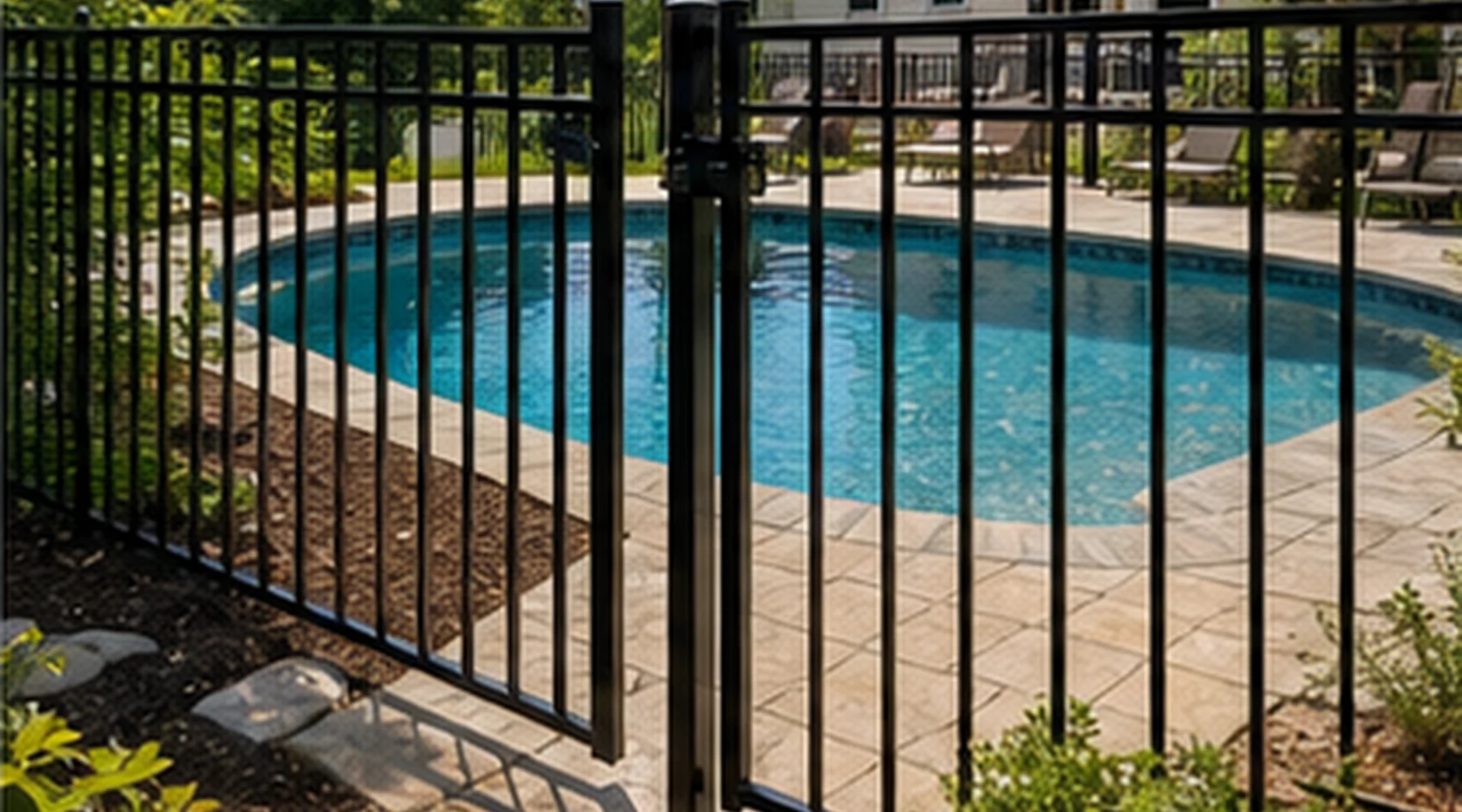
01Code Compliance Is the BaselinePool fencing in Frederick County must comply with Maryland's adoption of the IRC (Section AG105). Every dimension — height, picket spacing, foothold restriction, gate hardware — has a code requirement. We install to code and document it, not to aesthetic preference.
02No Footholds on the Pool SideHorizontal members on the pool-facing side of the fence below 45 inches give a child footholds to climb. Decorative horizontal-rail aluminum or wood rail fences with horizontal members below this height are not pool-barrier compliant. We specify materials and profiles that meet the no-foothold requirement.
03Every Gate Must Be CompliantEvery gate in the pool barrier perimeter must independently meet the self-close, self-latch, and latch-height requirements. Forgetting the utility door to the pump room or the garden gate into the pool area is one of the most common pool barrier inspection failures.
Maryland Pool Barrier Code Requirements
Maryland adopts the International Residential Code (IRC) for residential pool barriers. The key requirements under IRC Section AG105:
Barrier height: Minimum 48 inches measured from finished grade on the exterior side of the barrier. The measurement is from the lowest accessible point outside the barrier — not from inside the pool deck, which may be elevated.
Openings: No gap that allows a 4-inch sphere to pass — pickets must be no more than 3.5 inches apart. Bottom clearance from grade to the lowest fence member must also not exceed 4 inches.
Footholds: No horizontal members that can be used as footholds on the pool side of the barrier below 45 inches. Ornamental aluminum with vertical pickets and horizontal rails at the top and bottom of the panel may meet this if rails are above 45 inches.
Gates: All gates must be self-closing and self-latching. Latch must be on the pool side or at 54 inches minimum height.
Pool Fence Materials We Install
- Ornamental aluminum (most common, rust-free, low maintenance)
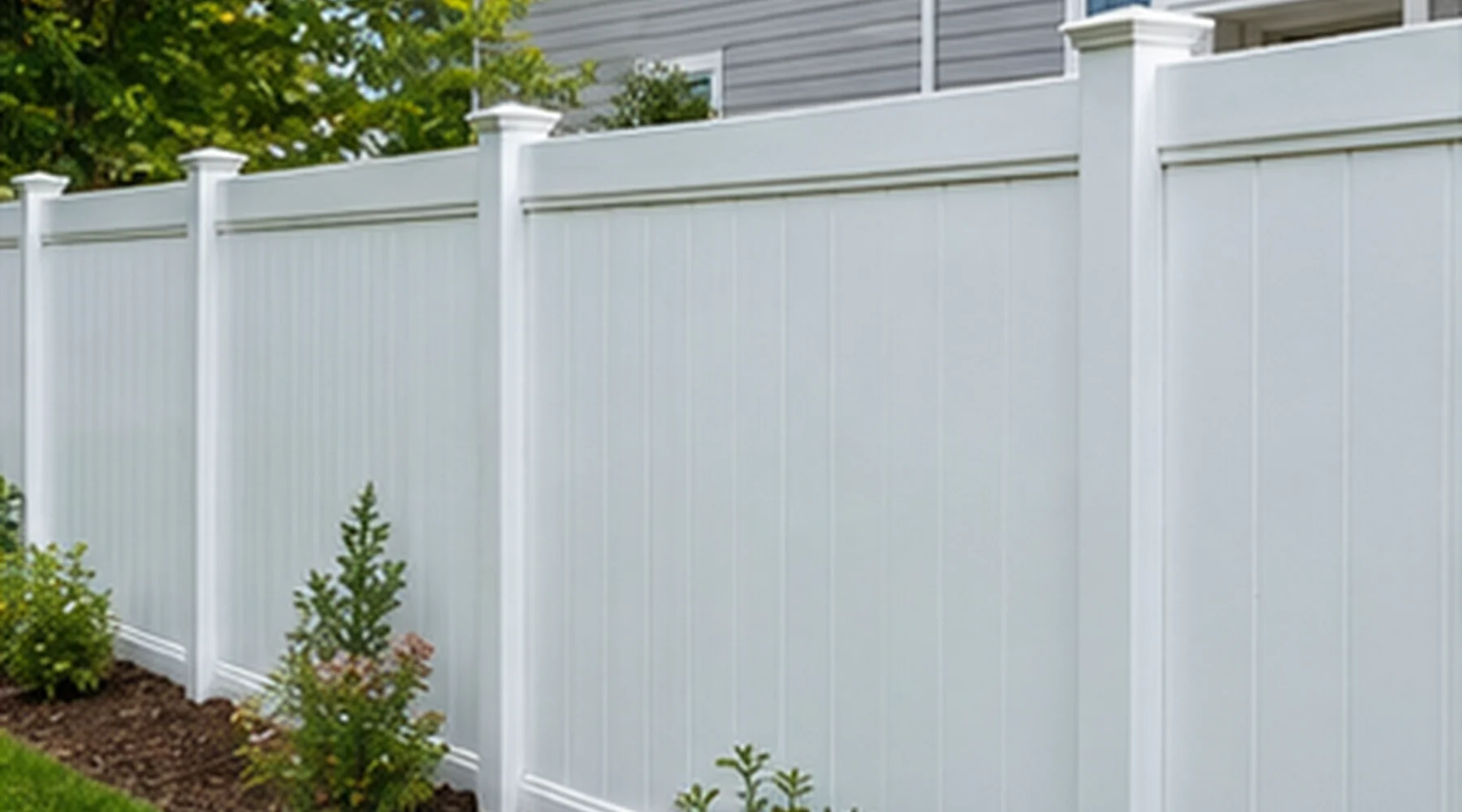
- Vinyl panels with compliant picket spacing
- Frameless or semi-frameless glass
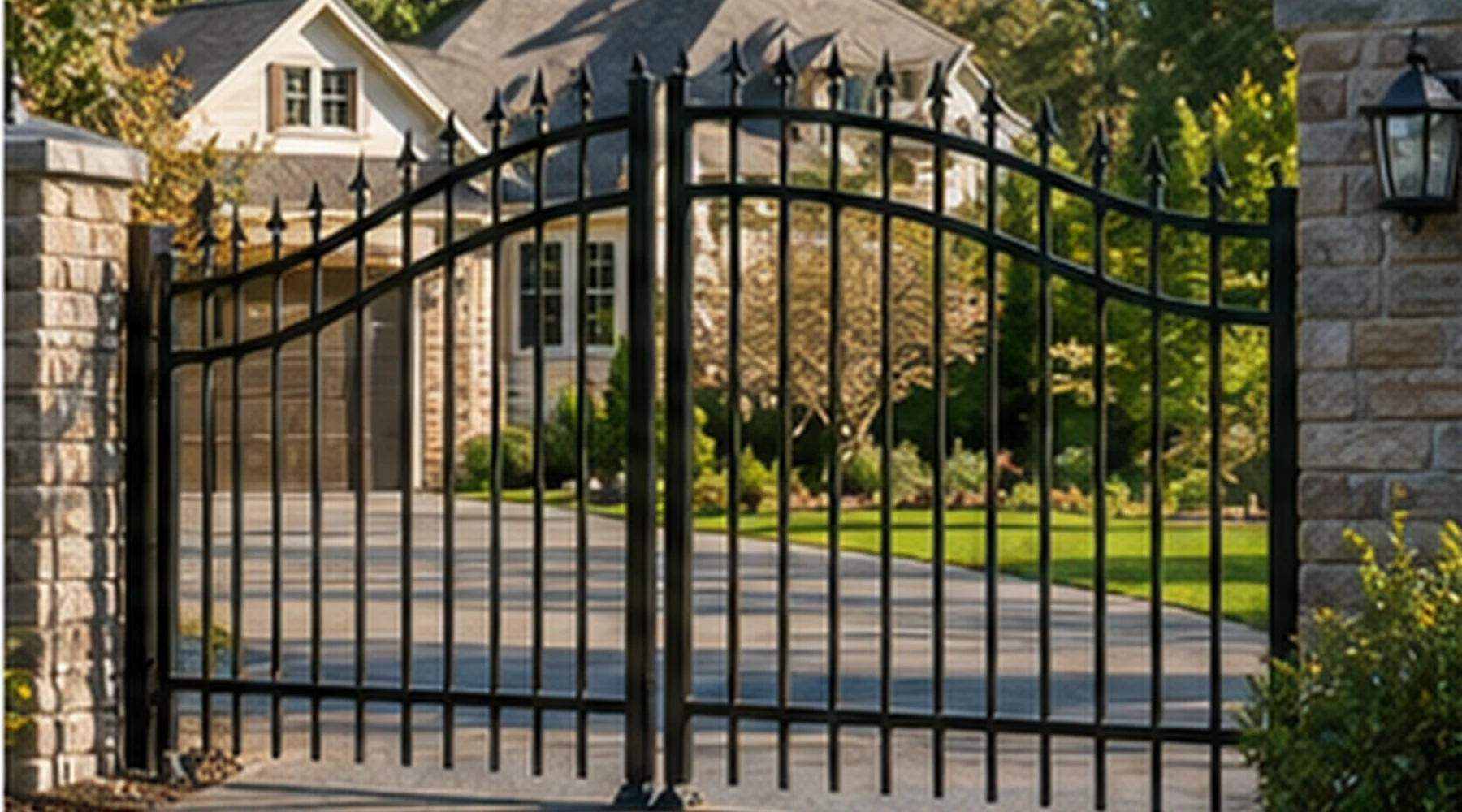
- Steel or wrought iron (requires paint maintenance)
Pool Fence Installation Standards
- Posts at 30-inch minimum depth with concrete
- Picket spacing verified at installed position (not just at purchase)
- All gate posts concrete-filled to grade
- Self-close tested from multiple gate positions at completion
Pool Fence Inspection in Frederick County
New pool construction in Frederick County requires a pool barrier inspection as part of the pool permit close-out. The inspector checks height, gap measurements, gate function, and latch compliance. If the pool is existing and you're replacing the barrier, confirm whether a re-inspection is required with the county. We provide documentation of the installation that supports the inspection process.
Distance from Pool Edge
Code specifies that the barrier must be at least 20 inches from the water's edge to prevent a child who scales the barrier from falling directly into the pool. If the pool is close to a property line or a structure, this spacing requirement may affect where the barrier can run. We confirm the setback before finalizing the fence location.
Using the House Wall as Part of the Barrier
The house wall can serve as one side of the pool barrier if all doors opening from the house into the pool enclosure are alarmed or have self-closing hardware. If you use the house wall as part of the barrier, the pool-side doors must comply with barrier requirements — this is a common oversight that causes inspection failures. We identify all doors into the pool area as part of the barrier design.
Annual Pool Fence Inspection
We recommend inspecting the pool barrier at the start of each pool season: check post plumb, gate self-close tension, latch engagement, and gap dimensions at the fence base where frost heave may have raised posts slightly. A barrier that was compliant when installed may develop gaps or latch issues after a winter of freeze-thaw cycling.