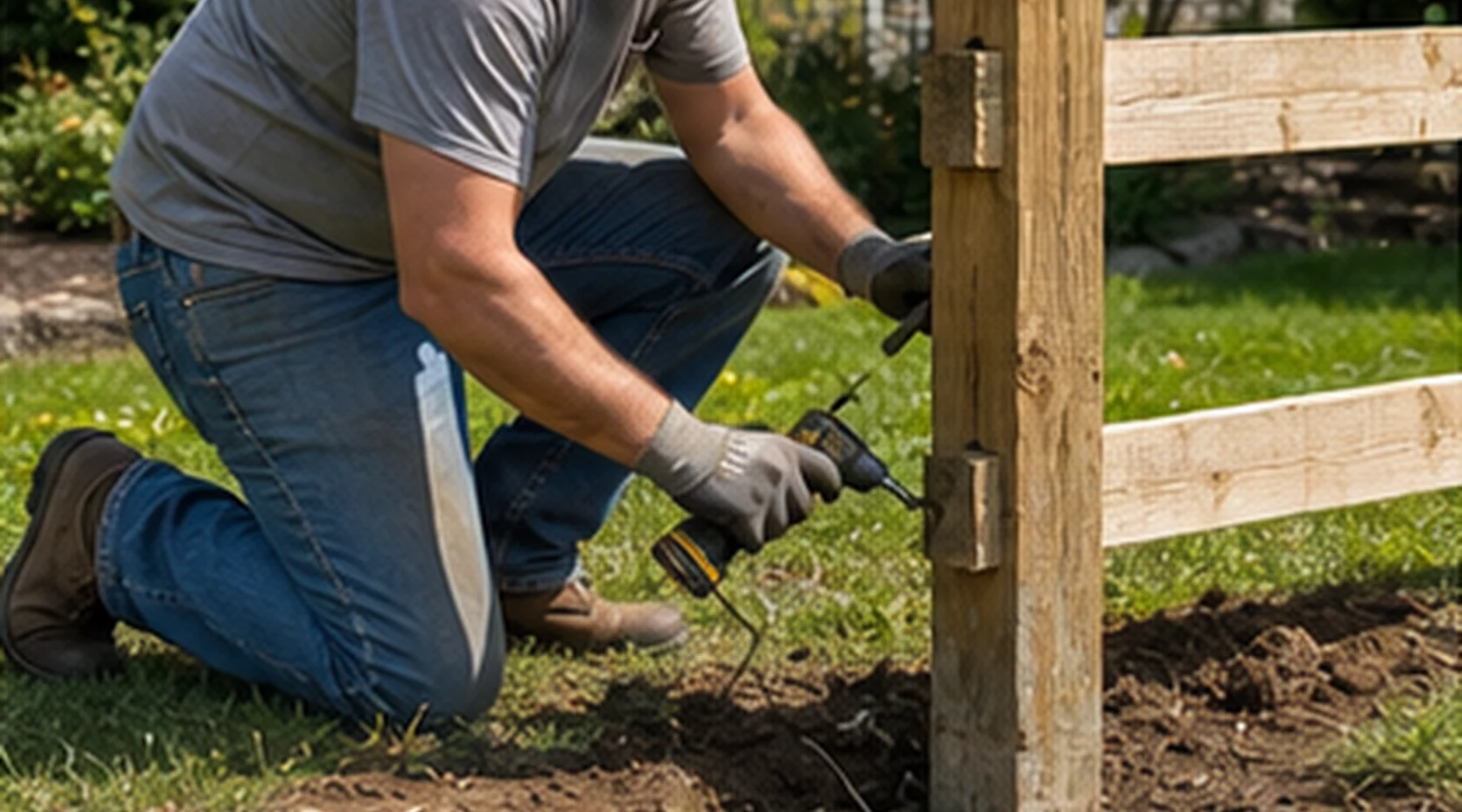
Color Matching: New Boards on Old Fence
New pressure-treated or cedar boards will not match the weathered color of a 5-10 year old fence immediately. New PT pine is a green-gray color that bleaches to silver over one season. Cedar starts as a light tan and weathers to silver as well. The repaired section will match over one to two seasons. Applying a penetrating stain to the entire fence at repair time — new and old boards together — produces the most uniform result.
Replacing Rails Without Replacing Posts
If rails are failing but posts are still sound, we can replace the rails while leaving posts in place. This involves temporarily removing boards from the affected bay, extracting the failing rail, and setting new rails with correct fastening. It's a more involved repair than just replacing boards, but significantly cheaper than a full section replacement including post work.
How Many Boards Can Be Replaced?
There's no limit on the count of boards that can be replaced — the practical question is whether the cost of the repair approaches the cost of full section or full fence replacement. For fences where more than 2/3 of the boards need replacement but the structure is sound, a full board replacement is still usually cheaper than full tear-out and rebuild because the structural cost (posts, concrete, rail installation) is the largest cost driver in full replacement.
Rot Detection: Looking Beyond the Obvious Boards
Boards that look fine at the surface sometimes have rot at the rail attachment points — the top and bottom inches where the board contacts the horizontal rail and traps moisture. We check the rail attachment area on all boards adjacent to confirmed rot, not just the visually damaged boards, to catch boards that are weeks from failing rather than waiting for them to fail after repair.