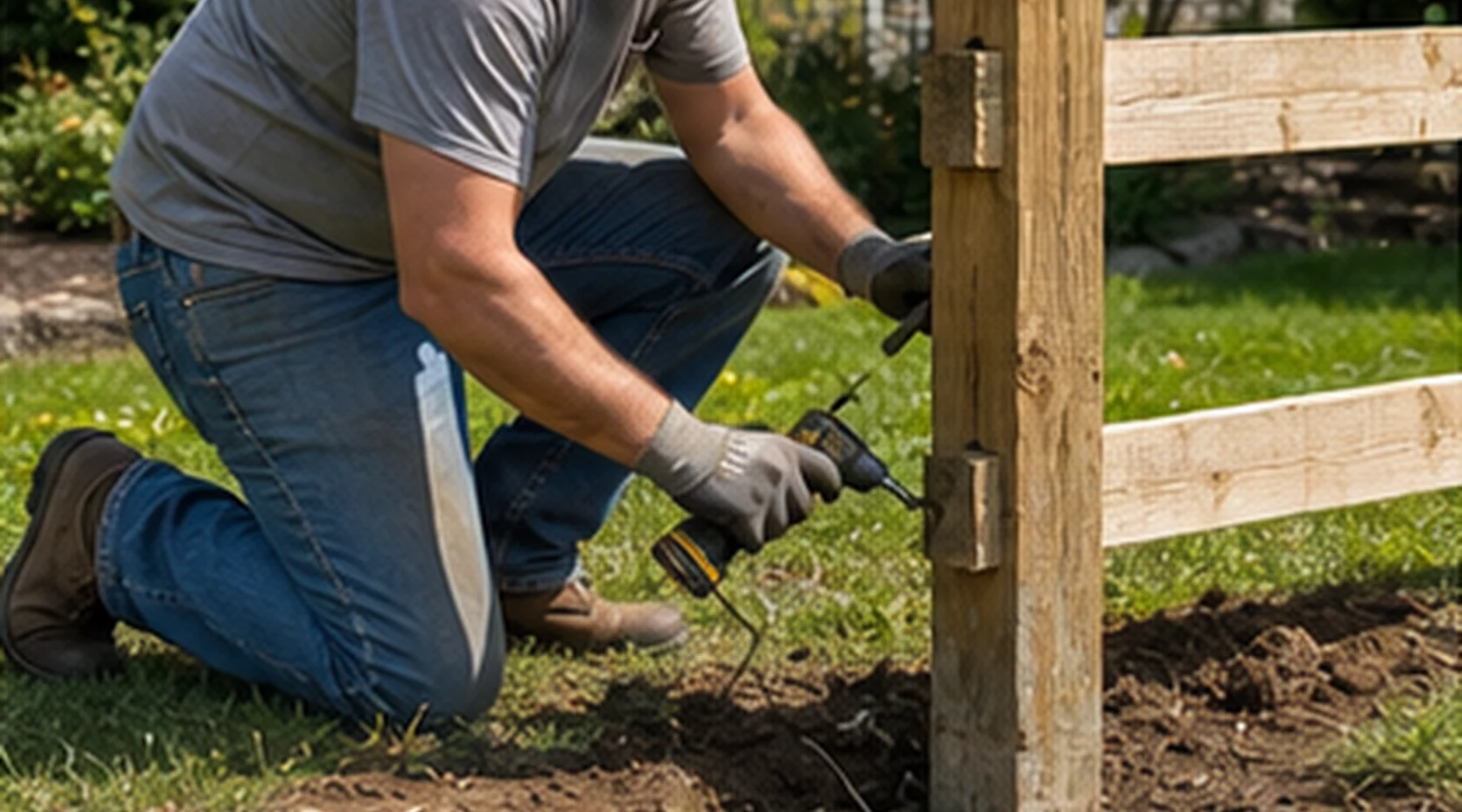
Leaning fence repair in Frederick

Fence Repair & Replacement

Leaning Fence Repair in Frederick, MD

Post reset and plumb correction when a section of fence has tilted — addressed at the root cause (failing or frost-heaved posts) rather than propped back to vertical temporarily.

01Don't Just Push It Back

A leaning post can't be driven back to plumb and expected to stay — the concrete is already fractured or the soil has shifted. Correct leaning fence repair means removing the post, extracting the old concrete, and starting the post installation fresh.

02Find Why It Leaned

Frost heave, soil saturation, shallow installation depth, and rot at grade can all cause leaning. If the cause isn't addressed, the replacement post will fail the same way. We identify the cause before setting the new post.

03Adjacent Posts Often Involved

A fence that leans in one direction is usually being pulled by one failing post. But the adjacent posts have been under lateral stress too. We check them before assuming only one post needs work.

Frederick Leaning Fence Repair

Leaning Fence: Structural Repair, Not Cosmetic Correction

A leaning fence is a structural problem, not a cosmetic one. The post is failing — either from frost heave pushing it out of the ground, rot compromising its strength at grade, or a shallow original installation that never had enough concrete depth. Pushing it back to vertical without replacing the post gives you a few weeks before it leans again. The permanent repair is removing the post, cleaning the hole, and setting a new post correctly.

Why Fences Lean in Frederick County

Frost heave: Posts set at insufficient depth in Frederick's clay soils are pushed upward as the frost line (approximately 30 inches) expands during winter. A post set at 18-20 inches will heave; a post at 30-inch minimum will not. Frost heave typically causes the post to rise above original grade and lean as the surrounding soil subsides unevenly when it thaws.

Soil saturation: Clay soils hold water. A post set in concrete surrounded by saturated clay loses its lateral resistance when the clay becomes plastic. Long wet periods — extended rain or snowmelt — can cause posts to shift even when the concrete is still intact.

Post rot at grade: Rot at the soil-air interface reduces the post's effective diameter and strength. The fence leans toward the direction of loading — usually toward the prevailing wind direction — because the rotted section can no longer resist the lateral force.

Types of Leaning Fence We Repair

  • Single post tilt (fence leans at one point)
  • Full section lean (multiple posts failing in the same direction)
  • Frost-heaved posts (post has risen above grade)
  • Post failure from rot causing lean along a run

Leaning Fence Repair Standards

  • Panels removed before post work begins
  • Old post and all concrete extracted from hole
  • New UC4B post set to 30-inch minimum depth
  • Panels reattached after full concrete cure
What Happens Next

Our Leaning Fence Repair Process

1

Assessment

Post condition assessed — rot probe, movement test, and degree of lean measured. Adjacent posts checked. Cause of lean identified. Full scope of post work confirmed.

2

Panel Removal

Fence panels removed from the leaning section. Stored safely on site. Rails detached from failing post(s).

3

Post Extraction and Reset

Failing post(s) pulled. Old concrete removed from hole. New post set at 30-inch minimum with fresh concrete. Post plumbed and braced for cure.

4

Panel Reattachment

After concrete cures, rails and panels reattached to new post. Alignment confirmed along the full fence run. Panel spacing and height matched to undamaged sections.

Can You Use Post Repair Spikes or Menders?

Post repair spikes (metal brackets that attach to the existing concrete and hold a new post alongside the old one) can work for a post that failed above grade. They are not appropriate when the original concrete is cracked or undermined, when the post rotted below grade, or when frost heave was the cause — in those cases, the spike anchors to the same failing concrete that caused the original problem. We assess whether spike repair is appropriate for each specific failure mode before recommending it.

One Leaning Post or a Pattern?

A single leaning post is usually a specific failure — a shallow installation or a rot pocket that developed faster than surrounding posts. Multiple leaning posts in the same run suggest a systemic problem: insufficient installation depth throughout, a drainage issue along the fence line, or a soil condition that affects the full run. We distinguish between isolated and systemic failures so the repair addresses the actual cause.

Temporary Bracing

If a leaning fence is urgent — an unsecured pet enclosure or a falling fence creating a safety hazard — we can provide temporary bracing to stabilize it before scheduling the full repair. Temporary bracing buys time but is not a permanent repair.

Leaning Gate Posts

Gate posts carry more load than line posts — the dynamic force from gate swing adds cyclic lateral stress. A leaning gate post should be replaced, not sistered or braced. Gate posts also need more concrete than line posts to carry the gate load without shifting over time.

Frederick Leaning Fence Repair

Fence Tilting Out of Plumb?

A leaning fence won't straighten itself — send photos and we will assess whether post repair or replacement is the right fix.

Request Service

Questions About Leaning Fence Repair

Can a leaning fence post be straightened without full replacement?

Only in limited cases — if the post is still structurally sound (no rot, no cracking) and the lean was caused by a single frost event that can be corrected. In most leaning fence cases, the post or concrete has been compromised and must be replaced. We probe and test the post before recommending full replacement vs. a less invasive reset.

Why did my fence lean toward one side instead of toward the street?

Fences lean in the direction of the dominant lateral load — typically the direction the prevailing wind pushes the panel. In Frederick, northwest winds in fall and winter are common, so north-facing privacy fences often lean south over time if posts are failing. Fences adjacent to driveways lean away from the driveway due to freeze-thaw action in the soil disturbed during driveway construction.

How do I prevent a fence from leaning after repair?

The primary prevention measures are correct post depth (30 inches minimum in Frederick County), UC4B treatment on posts, concrete to the full depth, and a slight mound of concrete at grade to shed water away from the post base. Beyond installation quality, annual inspection — pushing the post top to check for movement — lets you catch developing problems before they become visible lean.

Related Fence Repair Services