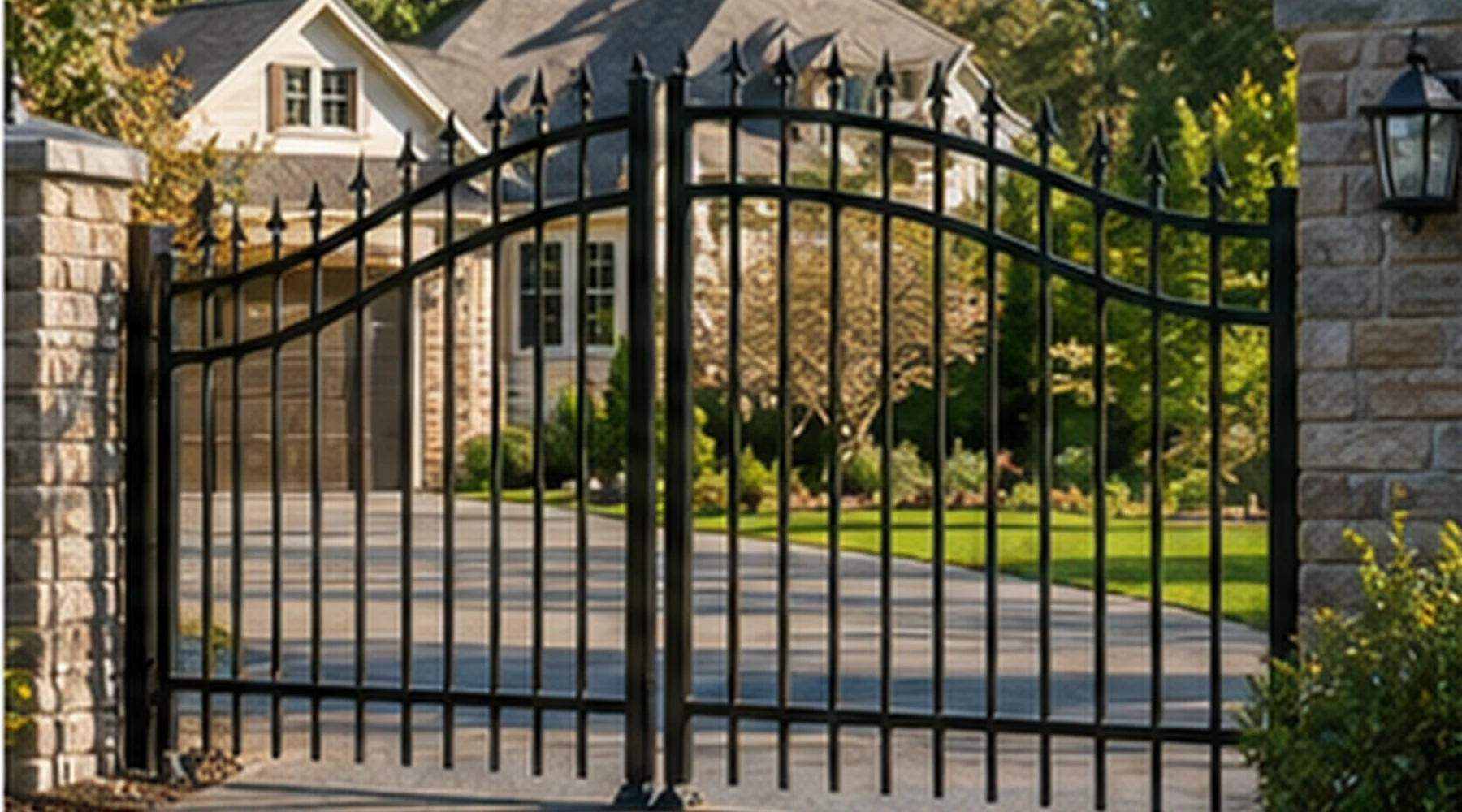
Pool gate installation in Frederick

Gates & Access Solutions

Pool Gate Installation in Frederick, MD

Self-closing, self-latching pool barrier gates installed to Maryland code — 48-inch minimum height, 3.5-inch picket spacing, and latch positioned to prevent child access.

01Code Is Not Optional

Maryland pool barrier requirements exist for child safety. A pool gate that doesn't meet code — wrong height, inadequate self-close spring tension, latch in the wrong position — is not just a code violation; it is a genuine safety hazard that puts children at risk.

02Self-Close and Self-Latch Must Both Work

The gate must close and latch under its own spring tension from any open position, not just from fully open. We test self-close from multiple partial-open positions before completing a pool gate installation.

03Latch Position Matters

Pool barrier gate latches must be positioned so a child cannot reach through or over to release them. The latch should be at 54 inches minimum — or on the pool-facing side — so it isn't reachable from the exterior by a small child.

Frederick Pool Gate Installation

Pool Gate Code Requirements in Maryland

Pool barriers in Maryland follow the International Residential Code (IRC) Section AG105. Key requirements: barrier height minimum 48 inches (measured from finished grade on the exterior); no openings that allow a 4-inch sphere to pass (picket spacing 3.5 inches maximum); no horizontal members on the pool-facing side below 45 inches that can be used as footholds; gates must be self-closing and self-latching; latch must be on the pool side or at 54 inches minimum. We install pool gates to meet these requirements and can provide documentation for pool inspections.

Pool Gate Materials: What Meets Code and What Doesn't

Aluminum ornamental: The most common pool barrier gate material. Panel gates with vertical pickets and 3.5-inch maximum spacing are code-compliant when correctly installed. The aluminum panel provides no footholds on the pool side. Powder-coated aluminum won't rust in pool environments.

Vinyl: Vinyl gates can meet pool barrier requirements if installed at 48 inches and with no footholds on the pool side. The panel style (no horizontal rails below 45 inches on the pool side) is required. Standard vinyl picket styles with low horizontal rails don't meet pool barrier requirements without modification.

Glass: Frameless or semi-frameless glass pool gates are available for contemporary pool designs. Glass panels provide no footholds and meet pool barrier requirements when installed at correct height. More expensive than aluminum but complement modern pool areas.
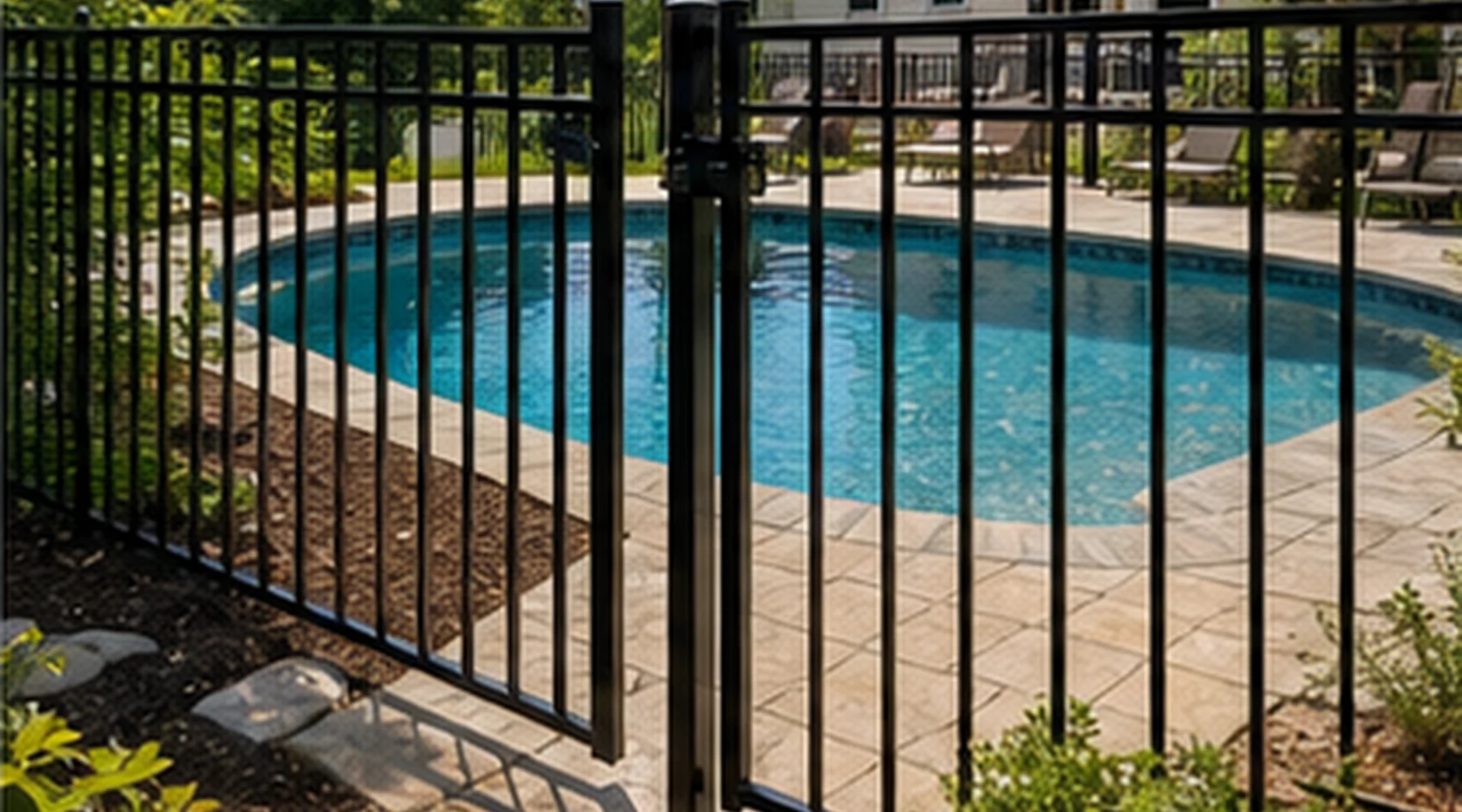
Pool Gate Code Requirements Summary

  • 48-inch minimum barrier height (exterior grade measurement)
  • 3.5-inch maximum gap between pickets or panels
  • No footholds on pool side below 45 inches
  • Self-closing and self-latching from any position
  • Latch at 54 inches minimum or on pool side

Pool Gate Installation Standards

  • Gate posts at 30-inch minimum depth with full concrete fill
  • Heavy-duty self-close hinge hardware with tension adjustment
  • Latch height set to 54 inches from grade
  • Self-close test from multiple positions before completion
What Happens Next

Our Pool Gate Installation Process

1

Code Review and Gate Specification

Barrier height confirmed at installed grade. Picket spacing confirmed for chosen material. Latch position and hinge type specified. Code compliance confirmed before ordering material.

2

Gate Post Setting

Gate posts set at 30-inch minimum depth with concrete fill. Post height set to achieve 48-inch gate height above finished grade. Posts plumbed and cured.

3

Gate Hang and Hardware

Pool barrier gate hung with self-close hinge hardware. Latch installed at 54-inch height. Picket spacing verified at installed position.

4

Self-Close and Latch Test

Gate opened to multiple positions (30°, 60°, 90°) and released. Must self-close and self-latch from each position. Hinge tension adjusted until test passes. Installation documentation provided.

New Pool Gate vs. Modifying Existing Gate

If the existing pool gate fails to self-close or self-latch, the fix is usually replacing the hinge hardware with self-closing hinges, not replacing the entire gate. If the gate is too short, doesn't have code-compliant picket spacing, or has footholds on the pool side, the gate itself needs replacement. We assess whether hardware replacement or gate replacement is the right solution before recommending a scope.

Annual Pool Gate Inspection

Pool gate self-close springs lose tension over time and should be tested at the start of each pool season. A gate that self-closes easily in May may no longer latch under its own spring tension by August. We recommend annual inspection of self-close hinge tension, latch engagement, and gate post plumb at the start of each pool season.

Multiple Pool Gates

If the pool barrier has multiple access gates — a main gate and a utility gate, or gates on multiple sides of the barrier — each must independently meet code requirements. All gates must be self-closing and self-latching. We inspect all gate locations as part of a pool barrier installation rather than focusing only on the requested gate.

Pool Barrier Inspection Requirements

New pool construction in Frederick County requires a pool barrier inspection before the pool can be filled. If an existing pool barrier gate is replaced or modified, the barrier should meet current code requirements at the time of repair. We can provide an installation record for inspection documentation if needed.

Frederick Pool Gate Installation

Pool Gate That Meets Maryland Code?

We install self-closing, self-latching pool barrier gates to IRC Section AG105 requirements.

Request Service

Questions About Pool Gate Installation

How high does a pool gate need to be in Maryland?

The International Residential Code (IRC), which Maryland adopts with amendments, requires pool barriers to be at least 48 inches measured from finished grade on the exterior of the barrier. The gate height must match the barrier height. The measurement is taken from the ground outside the pool enclosure, not from inside the pool deck area, which may be elevated.

What if my existing pool fence gate doesn't self-latch anymore?

The first step is replacing the hinge hardware with self-closing, self-latching hinges. If the gate frame is still sound and the gate dimensions and picket spacing still meet code, hardware replacement is the right fix. If the gate has other code compliance issues — too short, wrong picket spacing, or footholds — those need to be addressed as part of the repair. We assess the full gate condition before recommending hardware vs. gate replacement.

Does my pool gate need a lock?

Maryland code requires self-closing and self-latching gates, with the latch positioned on the pool side or at 54 inches minimum. An additional keyed lock is not code-required but is a good addition for when the pool is closed for the season. Padlocks through hasp hardware are the simplest option. We can add lock hardware at pool gate installation or as a separate service.

Related Gate and Pool Fence Services