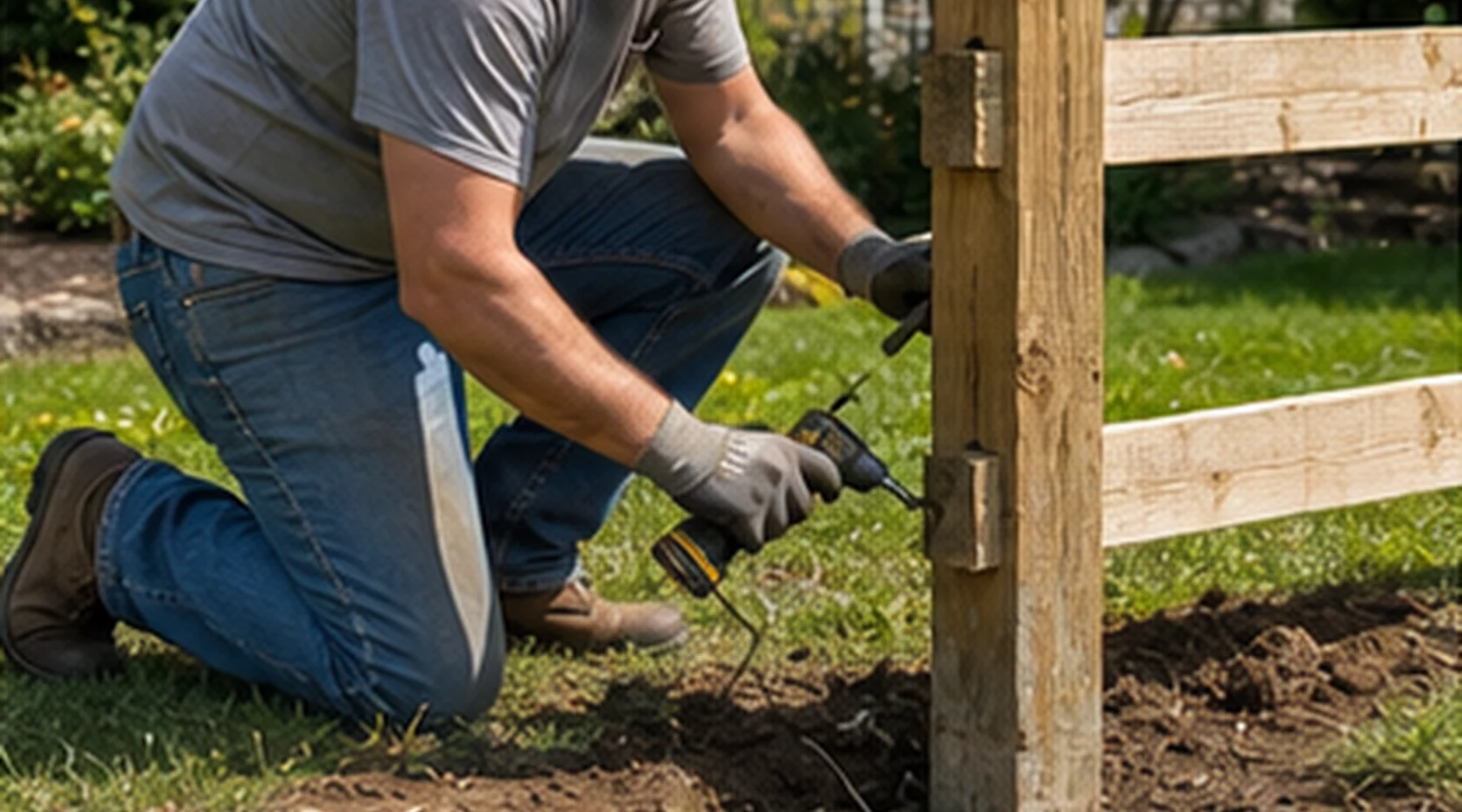
Fence post repair in Frederick

Fence Repair & Replacement

Fence Post Repair in Frederick, MD

Individual post replacement when a post is rotted at the base, cracked, or heaving — the right repair when a few posts are failing but the rest of the fence is sound.

01Probe Before You Replace

A post that looks sound at the surface may be hollow at the soil line. We probe every post in the repair area — not just the obvious one — before finalizing the scope to avoid missing adjacent posts that will fail within the year.

02Old Concrete Must Come Out

Reusing a post hole without removing old concrete leaves the new post sitting in a contaminated environment. We remove old concrete before setting new posts so the new post has correct contact with undisturbed soil and fresh concrete.

03Cure Before Reattaching Panels

Concrete needs 24 hours minimum to cure before rails and panels are reattached to the new post. Loading a post before concrete sets produces a post that leans slightly as it cures — the same problem as the original installation.

Frederick Fence Post Repair

Fence Post Repair: Diagnosing Before Digging

The first question in any fence post repair is whether adjacent posts are also failing. Replacing one post in a run where multiple posts are at the same stage of failure buys months rather than years. We probe the adjacent posts before committing to a scope, and we tell you honestly if the repair is worth doing or whether full replacement is the better investment.

Why Fence Posts Fail in Frederick

Frederick's freeze-thaw cycles and clay-heavy soils are the primary cause of fence post failure. A post set in clay holds water around the buried section, cycling wet and dry through winter. The worst damage happens at the soil-air interface — the zone where the post exits the ground — because this spot never fully dries out and is exposed to both soil moisture and air freeze-thaw cycles.

Posts that were not pressure-treated to UC4B ground-contact rating fail fastest. Posts set without concrete in clay soil heave as the frost pushes upward. Posts in standing-water areas — low spots, areas near downspouts — rot faster than posts in well-drained locations. Understanding the failure mode helps us address the underlying cause when replacing — not just swapping the post and repeating the same failure.

Signs a Post Needs Replacement

  • Post rocks when pushed from the top
  • Screwdriver penetrates post base easily (rot)
  • Post has cracked at or near grade level
  • Post is visibly heaved above original grade

What Post Replacement Includes

  • Panels removed and supported during post work
  • Old post and concrete removed from hole
  • New UC4B post set at 30-inch minimum with fresh concrete
  • Panels reattached after 24-hour cure
What Happens Next

Our Fence Post Repair Process

1

Full Post Assessment

All posts in the repair area probed, not just the obvious ones. Scope confirmed before any digging starts.

2

Panel Removal

Panels adjacent to the failing post removed and stored safely. Rails detached from post.

3

Post Extraction and New Post Set

Old post and concrete removed. Hole cleaned. New UC4B post set at 30-inch minimum with fresh concrete and plumbed.

4

Cure and Reattach

Concrete allowed to cure 24 hours. Rails and panels reattached. Alignment confirmed and matched to adjacent fence sections.

Can You Sister a Fence Post?

Sistering (attaching a new post alongside a failing one) is sometimes used as a repair method. It works when the old concrete is still sound and the post failed above grade. It is not appropriate when the post has rotted below grade or when the existing concrete is cracked or undermined — in those cases, the sister post will eventually fail the same way. We assess whether sistering is an appropriate repair for the specific failure before recommending it.

How Many Posts Can Be Repaired at Once?

Post repair requires removing panels from a section of fence temporarily. On a long fence run, we work in sections — repairing posts in one section at a time to avoid leaving long sections exposed for extended periods. We schedule post repair to minimize the number of days the fence has gaps.

New Post vs. Old Fence

When replacing a post in a 10-year-old wood fence, the new post is a different shade of wood than the weathered boards around it. It will blend in over one to two seasons as it weathers. There is no way to speed this up — it is a normal result of replacing a single component in an aged fence.

Drainage at the Post Base

If a post failed because the area drains poorly and holds water, the replacement post will eventually fail the same way. When drainage is the underlying cause, we discuss adding a gravel collar around the post base or directing the drainage issue before setting the new post. A replacement post in the same standing-water environment is not a permanent fix.

Frederick Fence Post Repair

Post Rotten at the Base or Cracked?

Send photos and we will assess whether post repair or fence section replacement is the right call.

Request Service

Questions About Fence Post Repair

How much of a fence post should be in the ground?

The general rule for fence post depth is one-third of the total post length in the ground, with a minimum of 24 inches for 4-foot fences and 30 inches for 6-foot fences. For 8-foot posts (a 6-foot fence with 30 inches below grade plus a few inches above the rails), the hole needs to be at least 30 inches deep. Posts in frost-susceptible soils should be set at or below the frost line — 30 inches in Frederick County.

Can I repair a fence post without removing all the panels?

Sometimes. If access below the fence allows removing only the panels immediately adjacent to the failing post, other panels can remain in place. On a solid privacy fence, this typically means removing 2-3 panels to access the post. We plan the access before starting to minimize panel removal while still getting enough clearance to extract the old post and set the new one correctly.

Is it worth repairing individual posts on an older fence?

It depends on the age and condition of the rest of the fence. If the fence is 10-12 years old and only a few posts are failing, repair makes sense. If the fence is 18+ years old and multiple posts are at various stages of failure, the cost of repairing posts sequentially over the next few years may exceed a single replacement cost. We assess the full fence condition and give you an honest recommendation.

Related Fence Repair Services